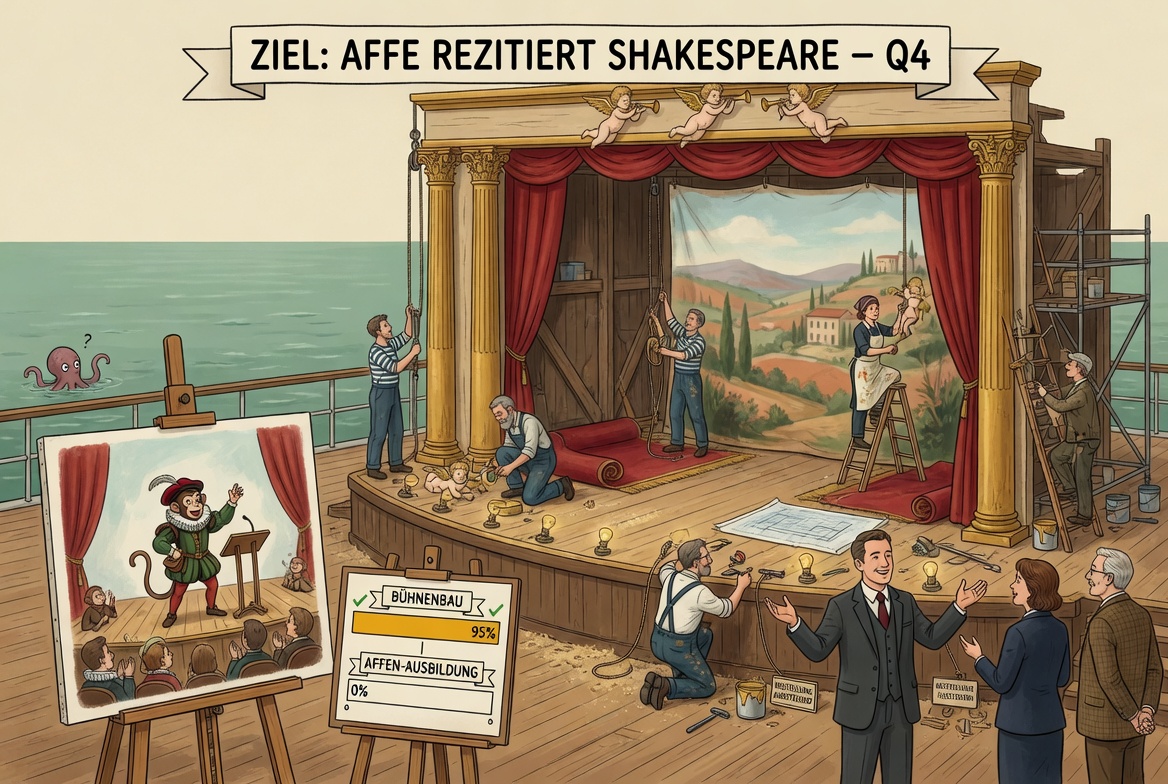

Tanker behavior
Think it all through, then start.
Big concept. Six months of preparation. Steering committees. Gold-plating. By launch the market has moved on. Or the concept dies before launch.
 The Octopus Principle®
Adaptability comes from experimenting. In a VUCA world, fast learning matters more than perfection.
Mistakes aren't sanctioned — they're a source of learning.
Experimenting means trying new things, testing hypotheses, and allowing controlled failure. Like an octopus uses its arms flexibly and tries new paths, the organization stays nimble. Innovation doesn't come from planning alone — it comes from continuous trying and adapting.
Instead of big bets: small, controllable experiments. Low cost, low risk, fast insight. 'Try it, then we scale.
Weeks, not months. Contact with reality as early as possible. Hypotheses get tested early, not at launch.
Every experiment yields data — even when it fails. That data flows into the next iteration immediately. Learning is the real output.
What we learn gets documented and shared. So that other teams don't repeat the same mistake. Learning becomes an organizational asset.
Big concept. Six months of preparation. Steering committees. Gold-plating. By launch the market has moved on. Or the concept dies before launch.
MVP in 2–4 weeks. Real customers in real use. Data flows back, the concept adapts. When we scale, it's based on reality — not assumptions.
Curiosity in times of uncertainty creates opportunity and the drive for change.
Take the test→